
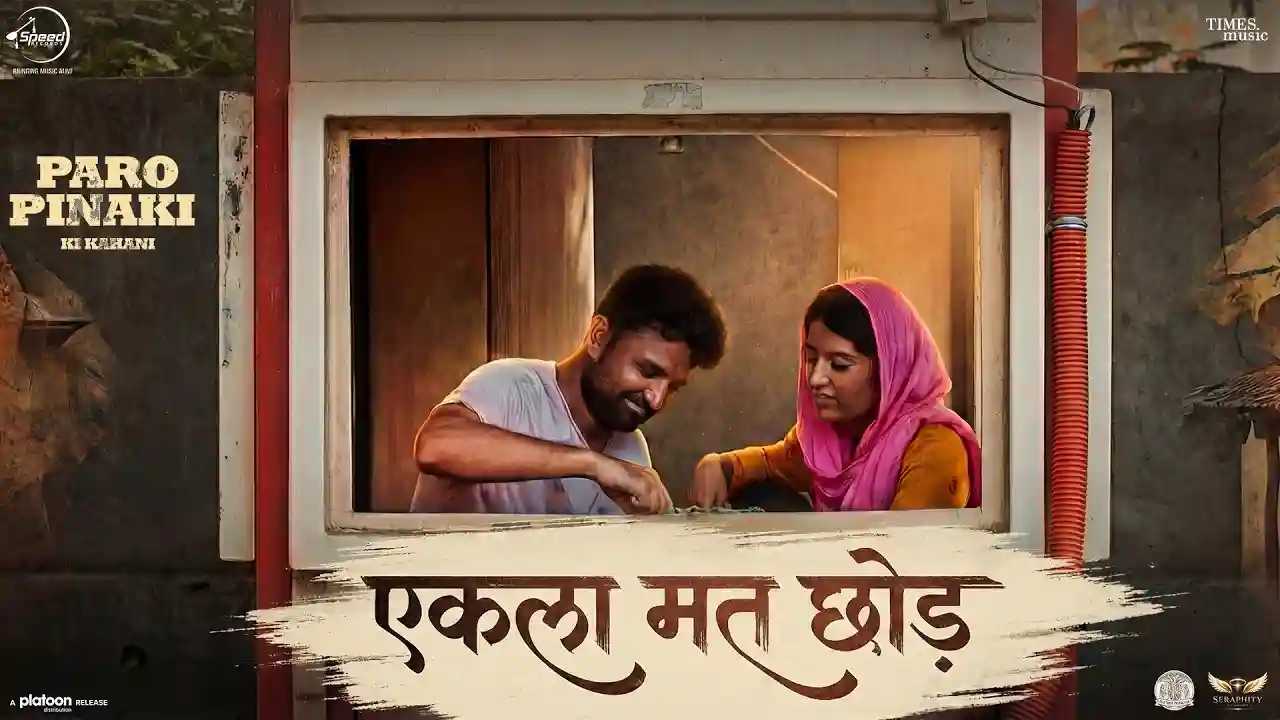
Ekla Mat Chhod Lyrics – A soulful Marwari folk song from Paro Pinaki Ki Kahani. Sung by Neeraj Aarya, this emotional plea of a Banjaara captures love, separation, and the pain of being left alone.
Ekla Mat Chhod Lyrics in English Letters (Romanized)
Ekla Mat Chhod Jo Banjaara Re
Ekla Mat Chhod Jo Banjaara Re
Pardes Ra Hai Maamla
Khota Ho Pyara Re
Door Desh Ra Maamla
Tedha Ho Pyara Re
Ekla Mat Chhod Jo Banjaara Re
Ekla Mat Chhod Jo Banjaara Re
Pardes Ra Hai Maamla
Khota Ho Pyara Re
Door Desh Ra Maamla
Tedha Ho Pyara Re
Apna Saheb Ne,
Bangalo Banaayo Re
Apna Saheb Ne,
Bangalo Banaayo Re
Upar Rakhiya Jharonkha
Jhaankeya Karo Pyara Re
Upar Rakhiya Jharonkha
Jhaankeya Karo Pyara Re
Ekla Mat Chhod Jo Banjaara Re
Ekla Mat Chhod Jo Banjaara Re
Pardes Ra Hai Maamla
Khota Ho Pyara Re
Door Desh Ra Maamla
Tedha Ho Pyara Re
Ho...
Kehat Kabira Suno Bhai Sadho..
Kehat Kabira Suno Bhai Sadho..
Pihu Thara Khat Mahye Aahye
Pihu Thara Khat Mahye Aahye
Written by: Traditional, Folk
🔗 Share/शेयर करें:
Ekla Mat Chhod Song Description
The song "'Ekla Mat Chhod'" is a traditional folk song in the Marwari language, it comes from the movie "'Paro Pinaki Ki Kahani'", which stars actors like 'Eshita Singh' and 'Sanjay Bishnoi'. The music is by 'Britto Khangchian', and it is beautifully sung by 'Neeraj Aarya', the record label for this song is 'Speed Records'. The lyrics are very poetic and emotional, they tell a story about a traveler, or "'Banjaara'", the main message is a plea, "do not leave me alone", which is what "Ekla Mat Chhod" means.
The words paint a picture of separation and longing, the singer describes a lover who is in a foreign land, or "'Pardes'", calling that situation false and crooked, yet still dear. There are images of a grand house, or "'Bangalo'", built by a master, with latticed windows, or "'Jharonkha'", to look out from, this creates a feeling of waiting and watching for a beloved person to return. The song repeats its core refrain, asking the wandering lover not to abandon the singer, emphasizing the deep pain of distance.
The lyrics also include a spiritual verse, referencing the poet 'Kabira', and mention a letter, or "'Khat'", from a beloved bird, or "'Pihu'", which is a symbol of love and message-bearing. Overall, the song uses simple, powerful folk poetry to express universal feelings of love, loneliness, and the hope for reunion, making it a touching and relatable piece of music.
Movie / Album / EP / Web Series
Audio / Video Link
Song Details
| Song | Ekla Mat Chhod Lyrics – Neeraj Aarya | Paro Pinaki Ki Kahani |
|---|---|
| Album | Paro Pinaki Ki Kahani |
Frequently Asked Questions
Which album is "Ekla Mat Chhod Lyrics – Neeraj Aarya | Paro Pinaki Ki Kahani" from?
The song is from the album "Paro Pinaki Ki Kahani".